
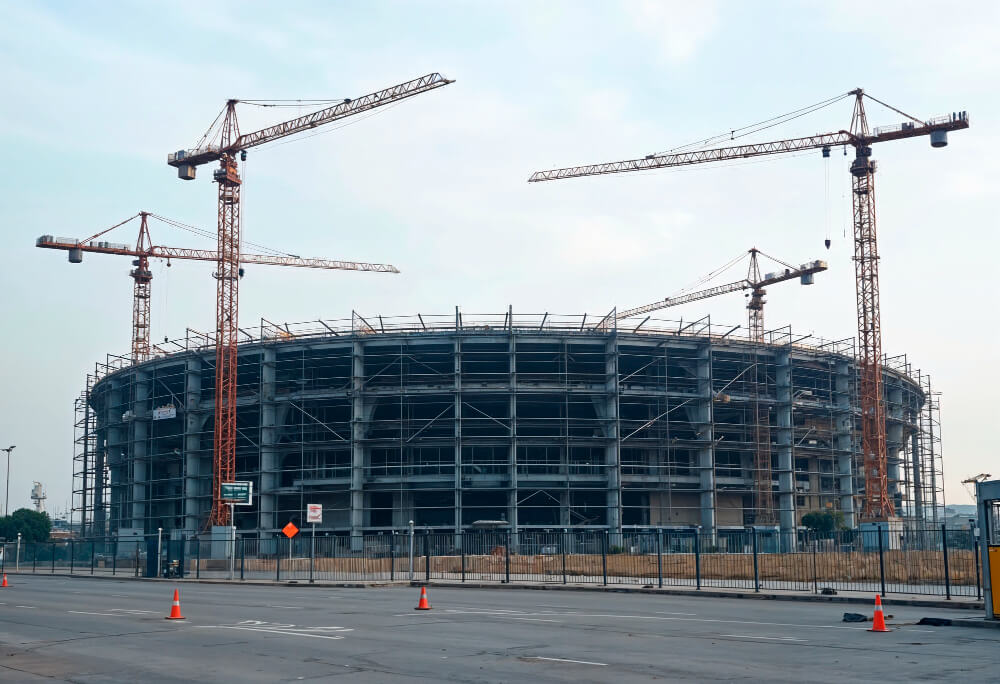
Modern construction is no longer limited to basic walls and roofs. Today’s engineering landscape is defined by innovation, efficiency, and performance-driven design. The selection of the right Types of Structures plays a crucial role in ensuring safety, durability, functionality, and cost-effectiveness in any project. From residential homes to skyscrapers and infrastructure projects, understanding different Types of Structures helps professionals make informed structural decisions.
Each structural system is designed to manage loads in a specific way. The choice depends on factors such as height, material availability, seismic conditions, architectural intent, and project budget. Let us explore the major Types of Structures used in modern construction projects and understand their characteristics in detail.
What Are Structures in Construction?
In construction, a structure is a system of connected components designed to resist and transfer loads safely to the ground. Structural systems ensure stability, prevent collapse, and maintain usability throughout a building’s lifespan.
Structures must resist different forces, including:
- Dead loads – These are permanent loads from the structure’s own weight.
- Live loads – These are movable loads like people, furniture, and equipment.
- Wind loads – These are lateral forces caused by wind pressure.
- Seismic loads – These are forces generated during earthquakes.
- Thermal stresses – These result from expansion and contraction due to temperature changes.
Different Types of Structures respond differently to these forces, which makes proper selection critical.
1. Load-Bearing Structures
Load-bearing systems are among the oldest Types of Structures and are commonly used in low-rise buildings. In this system, walls support the weight of slabs and roofs and transfer it directly to the foundation.
Key characteristics include:
- Structural walls carry vertical loads directly to the ground.
- No separate beam-column framework is required.
- Wall thickness increases as building height increases.
- Suitable mainly for low-rise residential construction.
Load-bearing Types of Structures are economical and simple to construct but offer limited flexibility in floor planning. As the building height increases, the wall thickness becomes impractical, making this system unsuitable for high-rise projects.\
2. Framed Structures
Framed systems are the most widely used Types of Structures in modern construction. Instead of walls carrying loads, a skeleton framework of beams and columns supports the structure.
Important features include:
- Columns transfer vertical loads safely to foundations.
- Beams distribute slab loads to columns.
- Slabs act as horizontal load-carrying surfaces.
- Lateral systems resist wind and earthquake forces.
Framed Types of Structures allow greater design flexibility and open floor layouts. They are ideal for multi-storey residential buildings, commercial complexes, and office towers.
Subcategories of framed structures include:
Rigid Frame Systems –
- Beam-column joints resist bending moments effectively.
- Suitable for buildings exposed to lateral forces.
- Provides structural stability without additional bracing.
Braced Frame Systems –
- Diagonal bracing increases lateral resistance.
- Steel bracing improves stiffness against wind forces.
- Common in industrial and warehouse buildings.
Shear Wall Systems –
- Reinforced concrete walls resist horizontal loads.
- Improves stability in high-rise buildings.
- Often integrated with framed systems.
These variations make framed Types of Structures highly adaptable to modern urban demands.
3. Truss Structures
Truss systems are efficient Types of Structures used to span large distances without intermediate supports. They consist of triangular units that distribute forces effectively.
Key features include:
- Triangular shapes provide inherent geometric stability.
- Members experience either tension or compression.
- Efficient material usage reduces structural weight.
- Suitable for long-span applications.
Truss Types of Structures are commonly used in bridges, industrial roofs, stadiums, and railway stations. Their lightweight yet strong configuration makes them cost-effective for covering large spaces.
4. Shell Structures
Shell systems are curved structural forms that derive strength from their geometry rather than thickness. These Types of Structures are thin but capable of spanning large areas.
Important characteristics include:
- Curved surfaces distribute loads efficiently.
- Thin sections reduce material consumption.
- Can resist both compressive and tensile forces.
- Provide architectural elegance along with strength.
Shell Types of Structures are widely used in domes, auditoriums, and exhibition halls. Their ability to combine aesthetics with structural performance makes them popular in iconic projects.
5. Precast Structures
Precast systems are modern Types of Structures where components are manufactured off-site and assembled on-site.
Major benefits include:
- Factory-controlled production improves quality.
- Faster installation reduces project duration.
- Minimizes site labor dependency.
- Reduces material wastage.
Precast beams, slabs, and columns are commonly used in residential, commercial, and infrastructure projects. These Types of Structures enhance construction efficiency significantly.
6. Pre-Engineered Buildings (PEB)
Pre-engineered systems are specialized Types of Structures designed and fabricated entirely in factories before assembly at site.
Core features include:
- Structural components are precision-fabricated.
- Assembly at site is quick and systematic.
- Suitable for industrial and warehouse projects.
- Reduces construction time drastically.
PEB Types of Structures are widely used in industrial sheds, logistics parks, and large storage facilities.
7. Composite Structures
Composite systems combine two different materials to achieve superior structural performance. These Types of Structures typically integrate steel and concrete.
Key aspects include:
- Steel handles tensile stresses efficiently.
- Concrete resists compressive forces effectively.
- Combined action improves overall load capacity.
- Reduces overall structural weight.
Composite Types of Structures are frequently used in high-rise buildings and bridge construction due to their strength and efficiency.
8. Mass Structures
Mass structures rely on their own weight and bulk to resist loads. These Types of Structures are usually large and solid.
Important features include:
- Stability is achieved through sheer weight.
- Suitable for resisting heavy lateral forces.
- Often used in infrastructure projects.
- Minimal reliance on reinforcement systems.
Dams and retaining walls are classic examples of mass Types of Structures.
9. Cable and Arch Structures
Cable and arch systems are specialized Types of Structures designed for long-span construction.
Cable Structures
- Use tensioned cables to carry loads.
- Suitable for suspension and cable-stayed bridges.
- Efficient for spanning large distances.
Arch Structures
- Transfer loads through compressive forces.
- Suitable for bridges and large roofs.
- Structurally stable due to curved geometry.
These Types of Structures allow elegant long-span solutions without intermediate supports.
11. Hybrid Structural Systems
Hybrid systems combine multiple structural techniques within a single project. These Types of Structures optimize performance and efficiency.
Key advantages include:
- Combines strengths of different materials.
- Enhances structural performance.
- Reduces construction time.
- Improves cost-effectiveness.
Modern skyscrapers often combine reinforced concrete cores with steel framing systems to achieve better results.
Factors Influencing the Selection of Structure Type
Selecting appropriate Types of Structures depends on several practical considerations:
- Building height determines structural system suitability.
- Soil condition influences foundation requirements.
- Seismic zone affects lateral load design.
- Budget constraints impact material choices.
- Construction timeline affects method selection.
- Architectural design dictates structural flexibility.
Careful evaluation ensures structural safety and long-term durability.
Conclusion
The evolution of engineering has introduced diverse Types of Structures that cater to different functional, environmental, and economic needs. From traditional load-bearing systems to advanced hybrid structural frameworks, each structural type plays a vital role in shaping modern construction.
Understanding the various Types of Structures enables engineers, architects, and project managers to choose systems that deliver optimal safety, efficiency, and performance. As construction technology advances further, structural systems will continue evolving to meet sustainability goals and complex design demands.