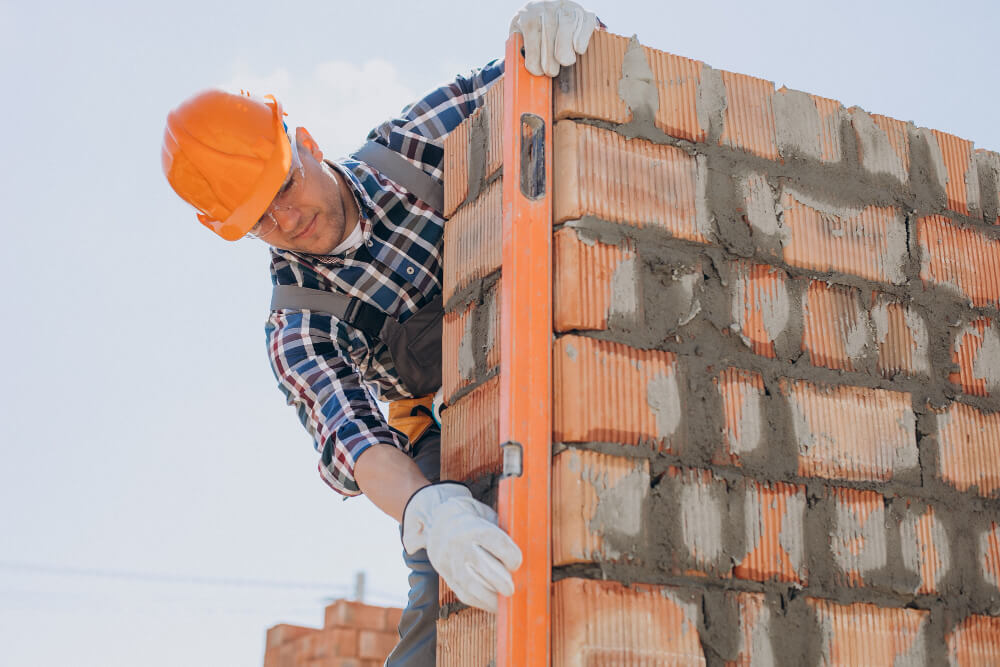
Brick masonry is one of the oldest and most trusted construction methods used across the world. From ancient monuments to modern residential buildings, brick masonry has proven its durability, strength, and timeless appeal. The technique involves arranging bricks systematically and binding them together using mortar to create strong structural elements such as walls, columns, partitions, and foundations. Even in today’s era of advanced construction materials, brick masonry remains a preferred choice for builders due to its reliability and cost-effectiveness.
Understanding brick masonry in depth is essential for engineers, architects, contractors, and homeowners who want long-lasting and structurally sound buildings. This article explores the types of bricks, different brick masonry techniques, bonding patterns, tools required, common defects, and best practices that ensure strong construction.
What Is Brick Masonry?
Brick masonry refers to the construction method in which individual bricks are laid in a specific pattern and joined together with mortar to form a solid structure. Mortar, typically made of cement, sand, and water, acts as the binding material that provides adhesion and load transfer between bricks.
In brick masonry construction, bricks are arranged in horizontal layers known as courses. Vertical and horizontal joints are filled with mortar to ensure stability and uniform load distribution. The strength of brick masonry depends on the quality of bricks, mortar composition, bonding pattern, workmanship, and curing process.
Brick masonry structures are mainly used for:
- Load-bearing wall
- Partition walls
- Boundary wall
- Columns and piers
- Architectural facades
Importance of Brick Masonry in Modern Construction
Brick masonry continues to be widely used due to several advantages:
- High compressive strength
- Excellent fire resistance
- Good thermal insulation properties
- Sound insulatio
- Durability and long service life
- Low maintenance requirements
Aesthetic versatility
Because of these benefits, brick masonry is used in residential buildings, commercial complexes, schools, hospitals, and industrial structures.
Types of Bricks Used in Brick Masonry
The performance of brick masonry largely depends on the type of bricks used. Different bricks are manufactured for specific structural and environmental requirements.
1. Burnt Clay Bricks
Burnt clay bricks are the most common bricks used in brick masonry. They are manufactured by molding clay and firing it in kilns at high temperatures. These bricks are durable, strong, and suitable for load-bearing walls.
They are classified into first-class, second-class, third-class, and fourth-class bricks depending on quality and usage.
2. Fly Ash Bricks
Fly ash bricks are made from fly ash, cement, sand, and water. They are environmentally friendly and provide good strength with lower water absorption compared to traditional clay bricks. Brick masonry constructed using fly ash bricks tends to have better dimensional accuracy.
3. Concrete Bricks
Concrete bricks are manufactured using cement, sand, and aggregates. They are known for their high compressive strength and are commonly used in structural brick masonry applications.
4. Sand Lime Bricks
Also known as calcium silicate bricks, these are produced by mixing sand, lime, and water under high pressure. They offer uniform shape, smooth finish, and good load-bearing capacity.
5. Engineering Bricks
Engineering bricks are high-strength bricks with low water absorption. They are particularly suitable for damp areas such as basements, foundations, and retaining walls.
6. Sun-Dried Bricks
These are unburnt bricks dried in the sun. They are used mainly in temporary or rural construction and are not suitable for permanent structural brick masonry.
Types of Brick Masonry Based on Mortar
Brick masonry can be categorized based on the type of mortar used.
Cement Brick Masonry
In this method, bricks are laid using cement mortar. Cement brick masonry is strong, durable, and suitable for load-bearing and permanent structures. It is the most commonly used form in modern construction.
Mud Brick Masonry
Mud mortar is used to bind bricks in this traditional technique. Mud brick masonry provides good thermal insulation but has lower strength compared to cement mortar masonry. It is generally used for temporary or low-rise rural structures.
Types of Brick Bonds in Brick Masonry
The arrangement of bricks in a specific pattern is called bonding. The bond plays a crucial role in the strength and stability of brick masonry.
-
Stretcher Bond
In stretcher bond, all bricks are laid with their longer face visible. This bond is commonly used for half-brick thick walls and non-load-bearing structures.
-
Header Bond
In header bond, bricks are laid with their shorter face exposed. This bond is suitable for thick walls and provides good structural interlocking.
-
English Bond
English bond consists of alternating courses of stretchers and headers. It is considered one of the strongest bonds in brick masonry and is widely used for load-bearing walls.
-
Flemish Bond
Flemish bond alternates stretcher and header within the same course. It offers a balance between strength and visual appeal.
-
Stack Bond and Decorative Bonds
Stack bond aligns bricks directly one above the other. While aesthetically modern, it requires reinforcement for structural stability. Other decorative bonds are used primarily for architectural finishes.
Essential Tools Used in Brick Masonry
Proper tools are necessary to achieve accurate and durable brick masonry construction.
- Brick trowel for spreading mortar
- Spirit level for alignment
- Plumb line for vertical accuracy
- Mason’s square for right angles
- Brick hammer for cutting bricks
- Measuring tape for precise dimensions
- Jointing tools for finishing mortar joints
Using the correct tools ensures uniform joints, straight walls, and professional workmanship.
Best Practices for Strong Brick Masonry Construction
For durable and structurally sound brick masonry, certain best practices must be followed.
1. Strong and Level Foundation
A stable foundation is essential. The base must be properly compacted and level to prevent settlement cracks in brick masonry walls.
2. Quality Materials
Only high-quality bricks and properly proportioned mortar should be used. Poor materials directly reduce the strength of brick masonry.
3. Soaking Bricks Before Use
Bricks should be soaked in water before laying to prevent them from absorbing moisture from the mortar too quickly.
4. Proper Mortar Mixing
Mortar must be mixed in correct ratios and used within its workable time. Inconsistent mortar reduces bonding strength.
5. Uniform Mortar Joints
Horizontal and vertical joints should have consistent thickness, generally around 10 mm. Uniform joints improve load distribution.
6. Correct Bond Pattern
The bond pattern should be selected based on structural requirements. English bond is recommended for load-bearing brick masonry.
7. Proper Curing
Brick masonry must be cured adequately for several days after construction. Curing helps mortar gain strength and reduces shrinkage cracks.
8. Damp Proofing Measures
Damp-proof courses and waterproofing techniques should be applied to prevent moisture penetration.
Common Defects in Brick Masonry
Despite careful construction, certain defects may develop in brick masonry.
-
Cracks
Cracks can occur due to foundation settlement, thermal expansion, or poor workmanship. Structural cracks should be addressed immediately.
-
Efflorescence
White salt deposits appear on brick masonry surfaces due to moisture movement. Proper drainage and quality materials reduce this issue.
-
Bulging Walls
Bulging may result from poor bonding or excessive loading. Proper design and reinforcement prevent such problems.
-
Moisture Penetration
Water seepage can weaken brick masonry. Proper plastering, pointing, and waterproofing reduce moisture risks.
Regular inspection and maintenance significantly extend the lifespan of brick masonry structures.
Advantages of Brick Masonry
Brick masonry remains a popular construction method because it offers:
- High durability
- Resistance to fire and weather
- Good compressive strength
- Thermal efficiency
- Cost-effectiveness
- Aesthetic flexibility
Its proven performance makes brick masonry suitable for both traditional and contemporary designs.
In short
Brick masonry continues to be a foundational element in construction due to its strength, reliability, and versatility. From selecting the right type of bricks to choosing the correct bond pattern and following best construction practices, every step contributes to the structural integrity of the building.
When executed with quality materials, skilled workmanship, proper curing, and regular maintenance, brick masonry structures can last for generations. Whether used for load-bearing walls, partitions, or architectural features, brick masonry remains a dependable and efficient construction technique that balances durability, performance, and beauty.
Subscribe to my channel on YouTube to gain access to a wealth of knowledge and expertise that can elevate your understanding of Real Estate, project management concepts, & Construction.
Related Articles: Construction