Concrete quality plays a crucial role in determining the strength, durability, and service life of any structure. Before concrete hardens, it must possess adequate workability so that it can be mixed, transported, placed, compacted, and finished without segregation or loss of strength. To evaluate this property on site, one of the most commonly used field tests is the Slump cone test.The Slump cone test is widely accepted across construction projects because of its simplicity, speed, and cost-effectiveness. It provides immediate feedback about the consistency of fresh concrete and helps engineers decide whether a mix is suitable for use or needs adjustment. Understanding the Slump cone test thoroughly is essential for anyone involved in concrete construction, from site supervisors to quality control engineers.
What is the Slump cone test?
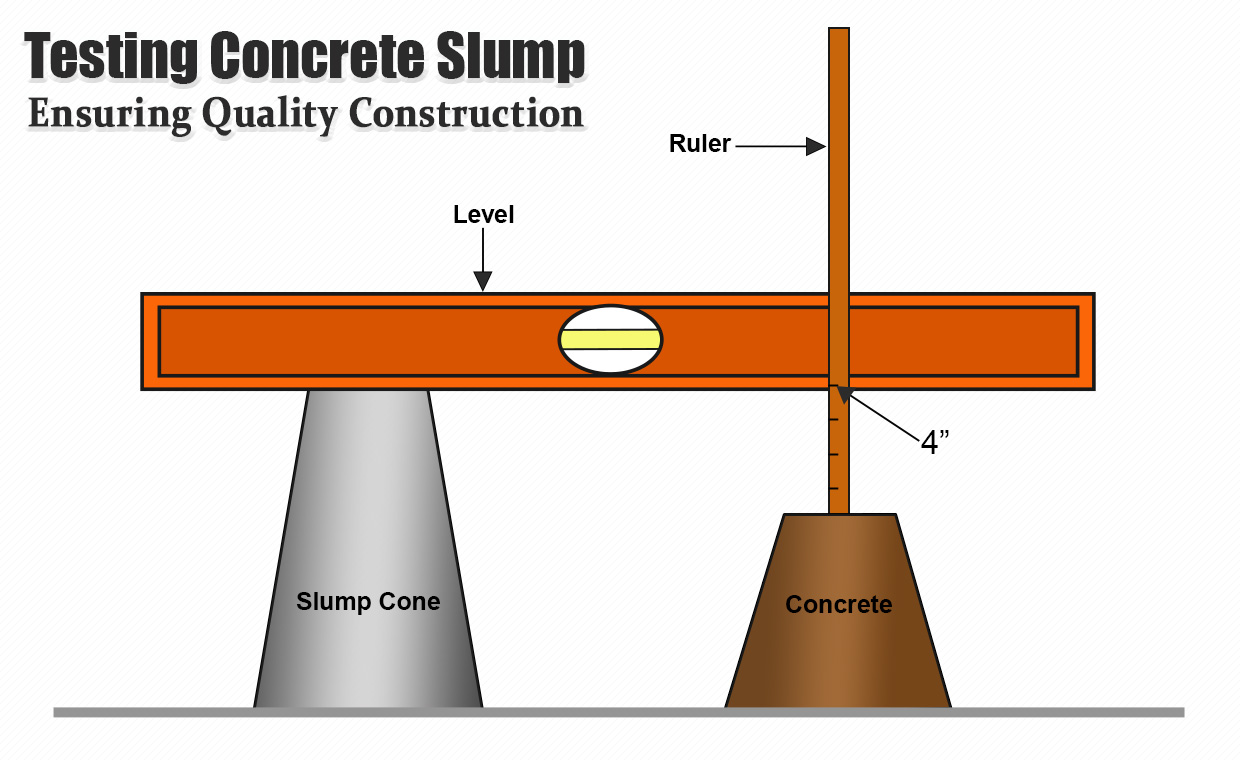
The Slump cone test is a field test conducted on fresh concrete to assess its workability and consistency. Workability refers to how easily concrete can be handled and placed, while consistency refers to the relative fluidity or mobility of the concrete mix.In the Slump cone test, fresh concrete is placed into a standard cone-shaped mold and compacted in layers. Once the mold is removed, the concrete settles or “slumps” due to gravity. The vertical drop in height of the concrete is measured and recorded as the slump value.The Slump cone test does not directly measure strength or durability. Instead, it serves as a quick indicator of whether the concrete mix has the desired water content and cohesiveness required for proper placement and compaction at site conditions.
Purpose of the Slump cone test
The Slump cone test is carried out for several important reasons in concrete construction.The key purposes include:
To assess the workability of fresh concrete before placement
To check the consistency of concrete from batch to batch
To detect variations in water content in the mix
To ensure quality control during concrete production and placement
To allow quick on-site decision-making without laboratory testing
By performing the Slump cone test regularly, site engineers can identify problems early and avoid placing concrete that may lead to segregation, honeycombing, or reduced strength.
Importance of workability in concrete
Workability is one of the most critical properties of fresh concrete. Concrete with poor workability is difficult to place and compact, leading to voids and weak zones in the structure. On the other hand, overly workable concrete may indicate excessive water content, which reduces compressive strength and increases shrinkage and cracking.The Slump cone test helps maintain a balance by ensuring that concrete is workable enough for placement but not so fluid that it compromises structural performance. This balance is particularly important in reinforced concrete where concrete must flow around steel bars without segregation.
Apparatus required for the Slump cone test
To perform the Slump cone test accurately, the following equipment is required.
Slump cone (Abrams cone) made of metal or rigid plastic
Base plate with a smooth, non-absorbent, and level surface
Tamping rod made of steel with rounded ends
Measuring scale or ruler
Freshly mixed concrete sample
The slump cone has a standard shape and size to ensure uniformity of test results across different sites and projects.
Standard dimensions of the slump cone
The Slump cone used in the Slump cone test has the following standard dimensions:
Height of cone: 300 mm
Bottom diameter: 200 mm
Top diameter: 100 mm
These dimensions are standardized so that results obtained from different locations and projects remain comparable.
Step-by-step procedure of the Slump cone test
The Slump cone test must be carried out carefully to ensure reliable results. The procedure involves the following steps.
Step 1: Preparation
Clean the slump cone and base plate thoroughly and ensure they are free from moisture, dust, or hardened concrete. Lightly dampen the interior surface of the cone to prevent concrete from sticking.
Step 2: Positioning the cone
Place the slump cone on a flat, rigid, non-absorbent surface. Ensure the cone is held firmly in place to prevent movement during filling.
Step 3: Filling the cone
Fill the cone with fresh concrete in three approximately equal layers. Each layer should be compacted uniformly.
Step 4: Compaction
Compact each layer with 25 strokes of the tamping rod. The strokes should be evenly distributed across the cross-section to remove air voids and ensure uniform density.
Step 5: Striking off excess concrete
After filling and compacting the top layer, strike off excess concrete using the tamping rod so that the concrete is level with the top of the cone.
Step 6: Lifting the cone
Carefully lift the slump cone vertically upward in a steady motion without any lateral movement. The lifting process should be smooth and completed within a few seconds.
Step 7: Measuring the slump
Allow the concrete to slump naturally. Measure the vertical distance between the original height of the cone and the highest point of the slumped concrete. This measurement is recorded as the slump value.
Types of slump observed in the Slump cone test
During the Slump cone test, different shapes of slump may occur. Each type of slump provides useful information about the concrete mix.
True slump
In a true slump, the concrete settles evenly and maintains its general shape. This is the most desirable result and indicates a cohesive and workable mix.
Shear slump
A shear slump occurs when one portion of the concrete mass slides sideways. This suggests lack of cohesion in the mix and may indicate improper aggregate grading or insufficient cement paste.
Collapse slump
In this case, the concrete collapses completely after removal of the cone. This indicates very high workability, often due to excessive water content, making the test result unreliable.
Zero slump
When there is little to no settlement of concrete, it is referred to as zero slump. This indicates a very stiff mix with low workability, commonly used in road construction or mass concrete works.
Interpretation of Slump cone test results
The slump value obtained from the Slump cone test helps determine whether the concrete is suitable for a specific application.General interpretation includes:
Low slump indicates stiff concrete with low workability
Medium slump indicates workable concrete suitable for reinforced sections
High slump indicates highly workable concrete, which may require careful control
The required slump value depends on the type of structure, method of compaction, and placement conditions. Higher slump may be acceptable when admixtures are used, but excessive slump due to water addition should be avoided.
Factors affecting the Slump cone test results
Several factors can influence the outcome of the Slump cone test.Important factors include:
Water-cement ratio
Aggregate size and grading
Cement content
Use of admixtures
Time elapsed between mixing and testing
Method of compaction
Even small variations in these factors can cause noticeable changes in slump values.
Limitations of the Slump cone test
While the Slump cone test is widely used, it has certain limitations that must be understood.Some key limitations are:
It is not suitable for very dry or very wet concrete mixes
It does not directly measure strength or durability
Results can vary with operator technique
It may not reflect true workability for high-performance or self-compacting concrete
Because of these limitations, the Slump cone test should be used as part of a broader quality control process rather than as the sole indicator of concrete performance.
Practical applications of the Slump cone test
The Slump cone test is commonly used in:
Ready-mix concrete plants
Construction sites for quality control
Highway and pavement works
Residential and commercial building projects
Reinforced concrete and foundation works
Its ease of use makes it ideal for frequent on-site testing.
Conclusion
The Slump cone test remains one of the most practical and widely adopted methods for assessing the workability and consistency of fresh concrete. Its simplicity, quick execution, and minimal equipment requirements make it indispensable for on-site quality control. By understanding the purpose, procedure, and interpretation of the Slump cone test, construction professionals can ensure that concrete mixes meet required standards before placement.Although the Slump cone test has certain limitations, when used correctly and combined with good construction practices, it plays a vital role in producing durable, strong, and high-quality concrete structures. Proper execution and interpretation of this test help prevent costly construction defects and ensure long-term performance of concrete works.Subscribe to my channel on YouTube to gain access to a wealth of knowledge and expertise that can elevate your understanding of Real Estate, project management concepts, & Construction.
Related Articles: Construction
 Concrete quality plays a crucial role in determining the strength, durability, and service life of any structure. Before concrete hardens, it must possess adequate workability so that it can be mixed, transported, placed, compacted, and finished without segregation or loss of strength. To evaluate this property on site, one of the most commonly used field tests is the Slump cone test.
The Slump cone test is widely accepted across construction projects because of its simplicity, speed, and cost-effectiveness. It provides immediate feedback about the consistency of fresh concrete and helps engineers decide whether a mix is suitable for use or needs adjustment. Understanding the Slump cone test thoroughly is essential for anyone involved in concrete construction, from site supervisors to quality control engineers.
Concrete quality plays a crucial role in determining the strength, durability, and service life of any structure. Before concrete hardens, it must possess adequate workability so that it can be mixed, transported, placed, compacted, and finished without segregation or loss of strength. To evaluate this property on site, one of the most commonly used field tests is the Slump cone test.
The Slump cone test is widely accepted across construction projects because of its simplicity, speed, and cost-effectiveness. It provides immediate feedback about the consistency of fresh concrete and helps engineers decide whether a mix is suitable for use or needs adjustment. Understanding the Slump cone test thoroughly is essential for anyone involved in concrete construction, from site supervisors to quality control engineers.