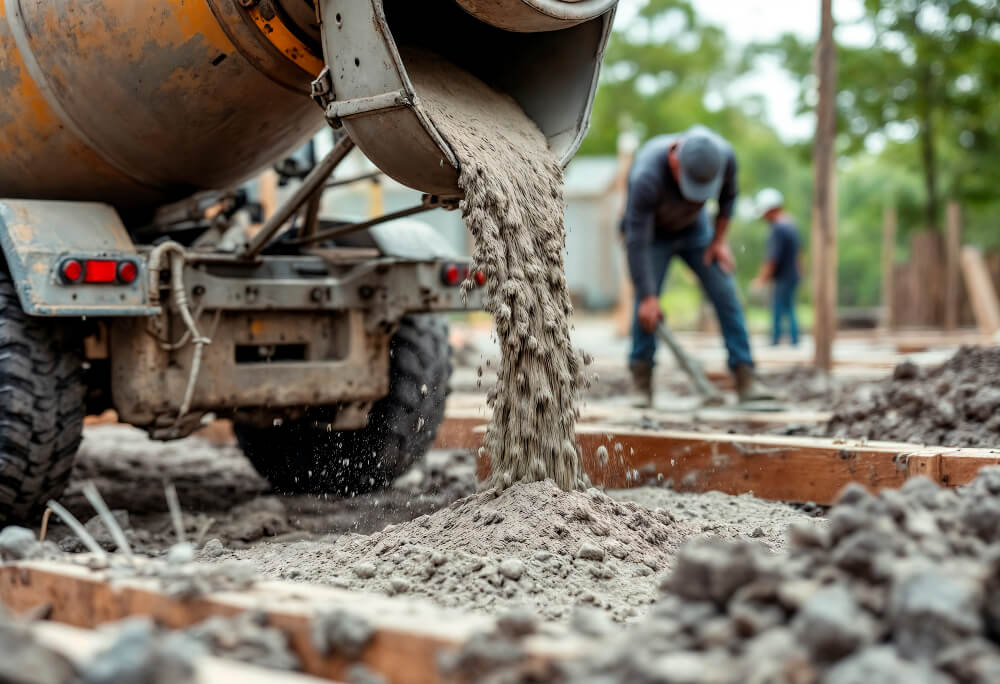
Light Weight Concrete has emerged as a vital component of contemporary construction, offering architects, engineers, and builders the ability to create structures that are strong yet significantly lighter than those made with conventional concrete.
With increasing demand for cost efficiency, sustainability, and structural optimization, Light Weight Concrete is now widely adopted in residential, commercial, and infrastructure projects. Its ability to reduce structural load while maintaining durability makes it one of the most practical innovations in modern building materials.
Introduction to Light Weight Concrete
Light Weight Concrete is a type of concrete that has a lower density than normal concrete. The typical density of conventional concrete ranges between 2200 to 2400 kg/m³, whereas Light Weight Concrete generally falls between 1440 to 1840 kg/m³ depending on the type and composition. The reduction in density is achieved by replacing traditional aggregates like crushed stone and gravel with lightweight aggregates such as expanded clay, shale, slate, pumice, or other porous materials.
Despite its lower density, Light Weight Concrete can be designed to achieve adequate compressive strength for many structural applications. It is engineered carefully to balance strength, durability, and reduced weight, making it suitable for a variety of construction needs.
How Light Weight Concrete Differs from Conventional Concrete
The primary distinction between Light Weight Concrete and normal concrete lies in the aggregates used and the resulting structural weight.
Key differences include:
- Lower density due to lightweight aggregates
- Reduced dead load on structural elements
- Better thermal insulation properties
- Improved fire resistance in many applications
- Slightly lower modulus of elasticity compared to conventional concrete
By reducing the dead load, Light Weight Concrete allows engineers to design buildings with smaller columns, foundations, and supporting structures. This can significantly impact overall project costs and structural efficiency.
Types of Light Weight Concrete
Light Weight Concrete is not a single uniform material. It includes several categories based on how the density reduction is achieved.
1. Lightweight Aggregate Concrete
This is the most common form of Light Weight Concrete. It uses lightweight aggregates such as expanded shale, clay, or slate. These aggregates are produced by heating natural materials at high temperatures, which causes them to expand and form a porous internal structure.
Features:
- Suitable for structural applications
- Offers good strength-to-weight ratio
- Commonly used in slabs, beams, and precast units
2. Aerated or Cellular Concrete
This type of Light Weight Concrete is produced by introducing air bubbles into the concrete mix using foaming agents or chemical reactions. The air voids reduce the density significantly.
Features:
- Excellent thermal insulation
- Lower compressive strength compared to structural lightweight concrete
- Often used for blocks, panels, and insulation layers
3. No-Fines Concrete
In this variation, fine aggregates are removed entirely. The absence of sand creates large voids within the mix, reducing density.
Features:
- Good drainage capability
- Lower strength compared to structural lightweight mixes
- Suitable for non-load-bearing applications
Each type of Light Weight Concrete is selected depending on structural requirements, insulation needs, and project specifications.
Key Properties of Light Weight Concrete
Light Weight Concrete offers several performance characteristics that make it valuable in modern construction.
Reduced Dead Load –
The most significant advantage of Light Weight Concrete is its reduced weight. Lower dead load decreases stress on foundations and structural members, allowing for more efficient design.
Thermal Insulation –
The porous structure of lightweight aggregates improves thermal resistance. Buildings constructed with Light Weight Concrete often experience better energy efficiency.
Acoustic Performance –
The internal void structure enhances sound absorption. This makes Light Weight Concrete suitable for residential buildings, offices, and educational institutions.
Fire Resistance –
Light Weight Concrete generally performs well under high temperatures. The trapped air within aggregates acts as insulation, improving fire resistance.
Workability –
Certain forms of Light Weight Concrete, particularly cellular concrete, are highly workable and easy to place in complex formworks.
Durability –
When properly designed and cured, Light Weight Concrete demonstrates satisfactory durability and long-term performance.
Advantages of Using Light Weight Concrete
The growing popularity of Light Weight Concrete in modern construction can be attributed to its numerous advantages.
Lower Structural Costs –
Because Light Weight Concrete reduces the load on foundations and columns, it can reduce reinforcement requirements and foundation sizes.
Faster Construction –
Precast elements made from Light Weight Concrete are easier to transport and install due to their lower mass.
Improved Seismic Performance –
In earthquake-prone areas, reduced structural mass decreases seismic forces. Light Weight Concrete can therefore contribute to improved safety.
Energy Efficiency –
The improved thermal performance of Light Weight Concrete reduces heating and cooling requirements, contributing to sustainable building practices.
Ease of Handling –
Workers find it easier to place and manage lighter structural elements, which can enhance productivity on site.
Applications of Light Weight Concrete in Modern Construction
Light Weight Concrete has a wide range of applications across various sectors.
1.High-Rise Buildings
In multi-storey structures, reducing dead load is critical. Light Weight Concrete is often used in floor slabs and walls to minimize the cumulative load on lower floors and foundations. This makes taller buildings structurally feasible and economically efficient.
2. Bridge Construction
Bridge decks benefit significantly from weight reduction. Using Light Weight Concrete reduces load on piers and supports, enabling longer spans and improved structural efficiency.
3. Precast Construction
Light Weight Concrete is commonly used in precast panels, blocks, and modular components. These elements are easier to transport and install, making them ideal for fast-track construction projects.
4. Roof Insulation and Screeds
Because of its insulating properties, Light Weight Concrete is widely used in roof insulation layers and floor screeds. It reduces heat transfer while adding minimal structural weight.
5. Partition Walls and Blocks
Aerated Light Weight Concrete blocks are popular in residential and commercial buildings. They offer thermal and acoustic insulation while reducing overall building mass.
6. Renovation and Retrofit Projects
In older buildings where structural capacity is limited, adding traditional concrete may overload the structure. Light Weight Concrete allows for extensions, additional floors, or upgrades without exceeding load limits.
7. Infrastructure Projects
Tunnels, pavements, and road sub-bases may incorporate Light Weight Concrete to reduce load and improve stability in specific soil conditions.
Design Considerations When Using Light Weight Concrete
While Light Weight Concrete provides numerous benefits, it requires proper engineering consideration.
Moisture Management –
Lightweight aggregates tend to absorb more water. Proper mix design and pre-wetting of aggregates are essential.
Strength and Stiffness –
Although Light Weight Concrete can achieve structural strength, its modulus of elasticity is generally lower than that of normal concrete. Engineers must account for this during structural design.
Curing Practices –
Proper curing is critical to achieve the intended strength and durability. Inadequate curing may affect long-term performance.
Cost Considerations –
In some regions, lightweight aggregates may be more expensive than conventional aggregates. However, overall project savings through reduced structural requirements often offset this cost.
Sustainability and Environmental Impact
Light Weight Concrete contributes positively to sustainable construction practices. Its reduced structural weight lowers material consumption in foundations and supporting members. Additionally, improved insulation properties reduce long-term energy consumption in buildings.
In certain cases, lightweight aggregates are produced from recycled materials or industrial by-products, further enhancing environmental performance.
As green building standards become more prominent globally, Light Weight Concrete is increasingly seen as a practical solution for energy-efficient design.
Performance in Modern Engineering
Modern engineering increasingly demands materials that offer multifunctional performance. Light Weight Concrete addresses multiple challenges simultaneously:
- Structural efficiency
- Energy conservation
- Fire safety
- Acoustic comfort
- Reduced transportation load
This versatility makes Light Weight Concrete suitable for both traditional and innovative architectural designs.
Summary
Light Weight Concrete has become an essential material in modern construction due to its unique balance of reduced weight and reliable performance. By replacing traditional dense aggregates with lightweight alternatives or introducing controlled air voids, Light Weight Concrete significantly decreases dead load without sacrificing structural integrity.
From high-rise buildings and bridges to precast panels and insulation layers, Light Weight Concrete is widely used across residential, commercial, and infrastructure sectors. Its advantages include improved energy efficiency, enhanced fire resistance, better acoustic performance, and reduced structural costs.
While it requires careful mix design and engineering consideration, the long-term benefits of Light Weight Concrete make it a valuable asset in contemporary construction practices. As the construction industry continues to prioritize sustainability, cost efficiency, and innovative design, Light Weight Concrete will remain a crucial material shaping the future of built environments.
Subscribe to my channel on YouTube to gain access to a wealth of knowledge and expertise that can elevate your understanding of Real Estate, project management concepts, & Construction.
Related Articles: Construction