
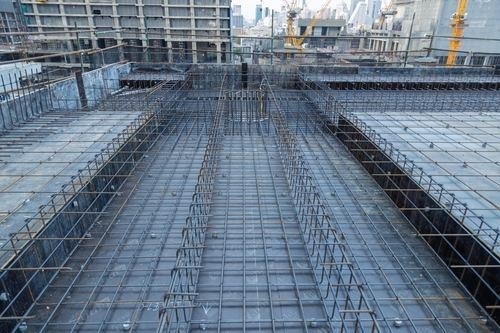
Concrete is one of the most widely used construction materials in the world, and at the heart of many structures lies the Concrete Slab. Whether it is a residential home, commercial building, warehouse, parking area, or industrial facility, a Concrete Slab serves as the foundation or floor system that supports loads and provides structural stability.
For beginners entering the construction industry, understanding the fundamentals of Concrete Slab construction is essential. From planning and site preparation to reinforcement, concreting, and curing, every stage plays a crucial role in ensuring durability and long-term performance.
This guide explains everything beginners need to know about Concrete Slab construction, including its types, materials, construction process, benefits, common mistakes, and best practices.
What Is a Concrete Slab?
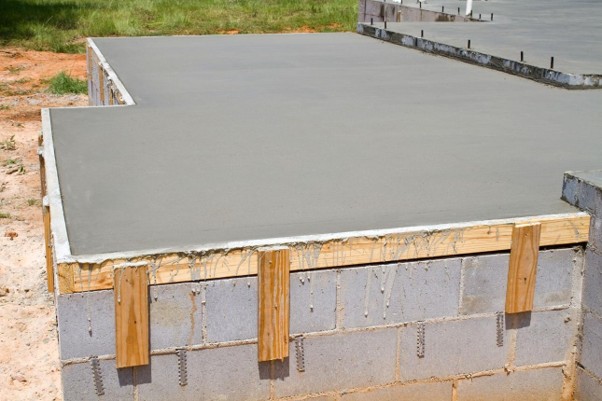
A Concrete Slab is a flat horizontal structural element made of reinforced or plain concrete. It is commonly used to create floors, roofs, pavements, driveways, and foundations in construction projects.
The primary purpose of a Concrete Slab is to:
- Transfer loads safely to supporting structures
- Provide a level and stable surface
- Distribute structural loads evenly
- Enhance the strength and durability of buildings
Depending on the project requirements, a Concrete Slab can vary in thickness, reinforcement details, and construction methods.
Why Concrete Slabs Are Important in Construction
A properly constructed Concrete Slab forms the backbone of many structures. It directly affects the building’s safety, durability, and performance.
Some major benefits include:
- High compressive strength
- Long service life
- Excellent load-bearing capacity
- Resistance to weather conditions
- Minimal maintenance requirements
- Compatibility with different floor finishes
Because of these advantages, the Concrete Slab remains one of the most trusted structural elements in modern construction.
Types of Concrete Slabs
Different construction projects require different types of Concrete Slab systems.
1. Ground Bearing Concrete Slab
This type rests directly on the ground and is commonly used in residential buildings.
Features include:
- Simple construction process
- Cost-effective solution
- Suitable for houses and low-rise buildings
2. Suspended Concrete Slab
A suspended Concrete Slab is supported by beams, columns, or walls rather than directly resting on the ground.
Applications include:
- Multi-storey buildings
- Commercial structures
- Parking facilities
3. Reinforced Concrete Slab
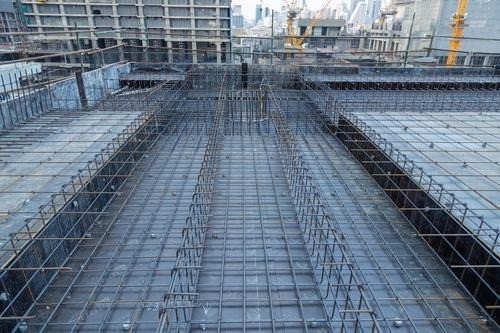
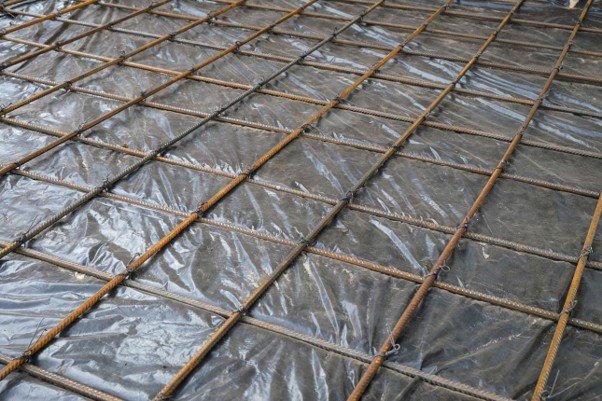
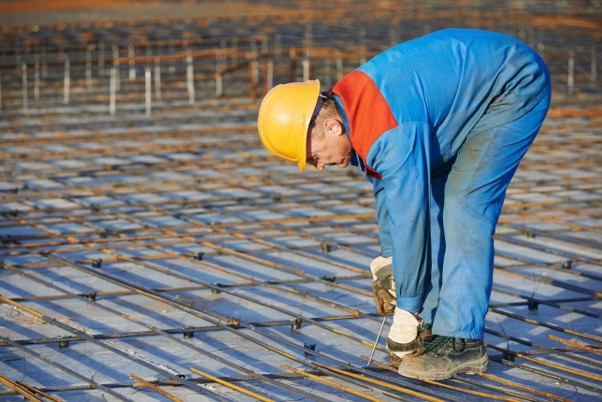
This is the most common type of Concrete Slab used in modern construction.
It contains steel reinforcement bars that improve:
- Tensile strength
- Crack resistance
- Structural performance
4. Flat Slab
Flat slabs are directly supported by columns without beams.
Benefits include:
- Faster construction
- Architectural flexibility
- Reduced floor height
5. Waffle Slab
Waffle slabs have a grid-like pattern on the underside.
They are used for:
- Large spans
- Commercial buildings
- High-load applications
Materials Required for Concrete Slab Construction
Several materials are required to construct a durable Concrete Slab.
The primary materials include:
- Cement
- Fine aggregate (sand)
- Coarse aggregate
- Water
- Reinforcement steel
- Formwork materials
- Admixtures (if required)
The quality of these materials significantly influences the strength and durability of the Concrete Slab.
Planning Before Constructing a Concrete Slab
Proper planning is one of the most important aspects of successful Concrete Slab construction.
Key planning considerations include:
- Slab dimensions
- Expected load requirements
- Soil conditions
- Drainage arrangements
- Reinforcement design
- Concrete grade selection
Failing to plan properly can lead to cracking, settlement, and structural problems later.
Site Preparation for Concrete Slab Construction
Before pouring concrete, the site must be prepared carefully.
The process typically includes:
Clearing the Area
Remove:
- Vegetation
- Debris
- Loose soil
- Organic materials
This ensures a stable base for the Concrete Slab.
Excavation and Leveling
The ground should be excavated and leveled according to design requirements.
Proper leveling helps:
- Prevent uneven settlement
- Improve load distribution
- Enhance slab performance
Compaction of Subgrade
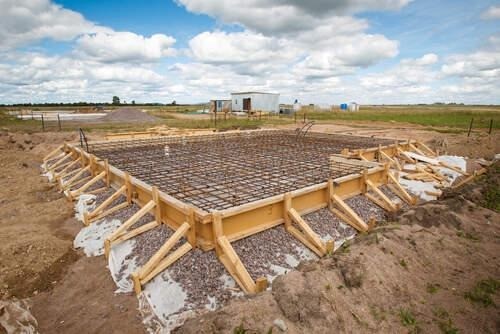
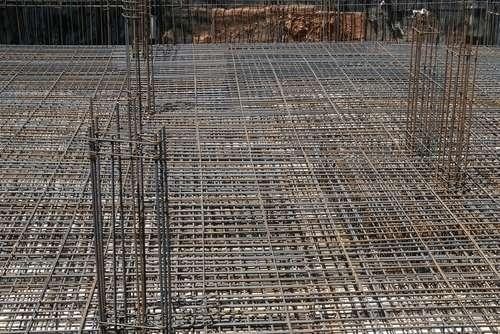
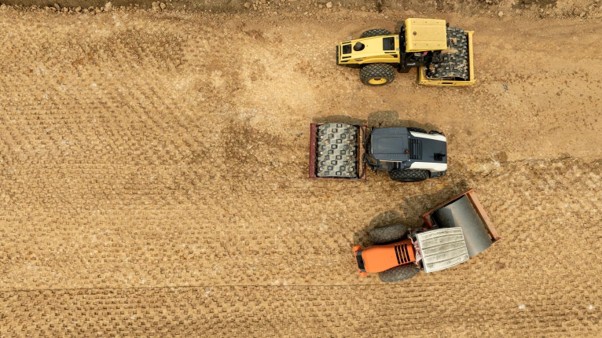
Compaction improves the stability of the soil beneath the Concrete Slab.
Benefits include:
- Reduced settlement
- Improved load-bearing capacity
- Better long-term performance
Compaction is usually carried out using mechanical compactors or rollers.
Importance of the Sub-Base Layer
After soil compaction, a sub-base layer is installed.
Common materials include:
- Crushed stone
- Gravel
- Granular fill
The sub-base serves several purposes:
- Improves drainage
- Prevents moisture migration
- Enhances load distribution
- Provides a stable working platform
A properly prepared sub-base significantly increases the lifespan of a Concrete Slab.
Formwork Installation
Formwork acts as a temporary mold that shapes the Concrete Slab until the concrete hardens.
Good formwork should be:
- Strong
- Level
- Properly aligned
- Leak-proof
Poor formwork installation can affect the dimensions and finish quality of the Concrete Slab.
Reinforcement Placement
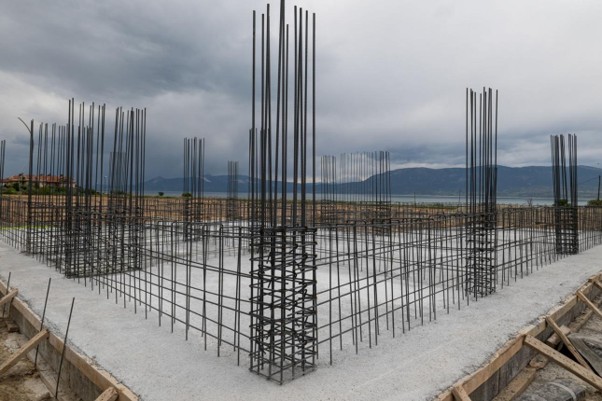
Reinforcement plays a critical role in Concrete Slab construction.
Steel reinforcement bars or welded wire mesh are installed according to structural design specifications.
Reinforcement helps:
- Resist tensile forces
- Minimize cracking
- Improve durability
- Increase structural capacity
Correct positioning of reinforcement is essential for optimal slab performance.
Concrete Pouring Process
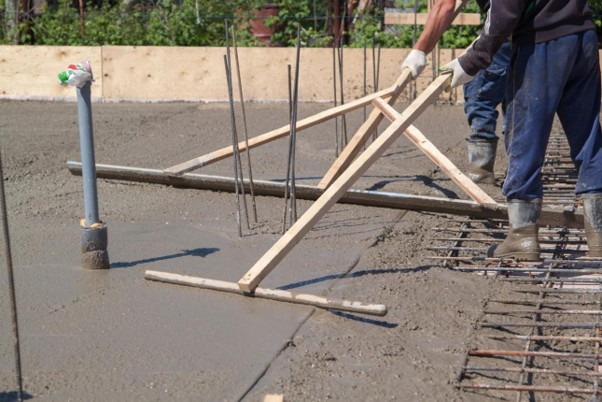
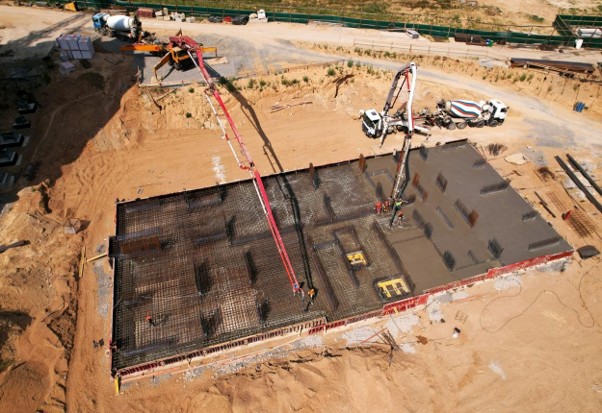
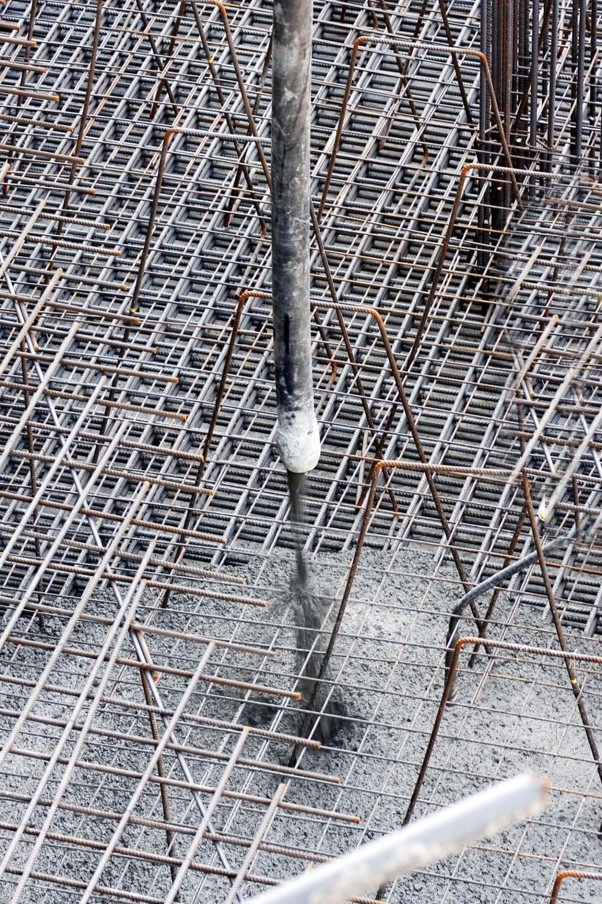
After completing preparation and reinforcement work, concrete is poured into the formwork.
Important considerations include:
- Consistent concrete quality
- Proper placement techniques
- Continuous pouring where possible
- Avoiding segregation
Concrete should be distributed evenly across the entire Concrete Slab area.
Compaction of Concrete
Concrete compaction removes trapped air pockets and improves density.
Methods include:
- Needle vibrators
- Surface vibrators
- Mechanical compaction equipment
Proper compaction results in:
- Increased strength
- Better durability
- Reduced honeycombing
- Improved surface finish
Insufficient compaction can weaken the Concrete Slab significantly.
Leveling and Finishing the Surface
After compaction, the Concrete Slab surface must be leveled and finished.
Common finishing methods include:
- Screeding
- Floating
- Troweling
- Broom finishing
The selected finish depends on the intended use of the slab.
For example:
- Industrial floors often require smooth finishes
- Outdoor pavements may require textured surfaces
Importance of Curing
Curing is one of the most important stages in Concrete Slab construction.
It involves maintaining adequate moisture and temperature conditions during concrete hardening.
Benefits of curing include:
- Increased strength development
- Reduced shrinkage cracking
- Improved durability
- Better surface quality
Concrete curing should generally continue for at least seven days, although longer curing periods often provide better results.
Common Defects in Concrete Slabs
Despite careful planning, defects can occur if proper construction practices are not followed.
Common Concrete Slab defects include:
- Shrinkage cracks
- Settlement cracks
- Surface scaling
- Honeycombing
- Curling
- Uneven surfaces
Most of these problems can be prevented through proper design, construction, and curing practices.
Factors Affecting Concrete Slab Quality
Several factors influence the quality of a Concrete Slab.
These include:
Concrete Mix Design
An appropriate mix design ensures adequate strength and durability.
Water-Cement Ratio
Excessive water can reduce concrete strength and increase cracking.
Workmanship
Skilled labor is essential for proper placement, compaction, and finishing.
Environmental Conditions
Temperature, humidity, and wind conditions can affect concrete performance during construction.
Monitoring these factors improves Concrete Slab quality significantly.
Safety Precautions During Concrete Slab Construction
Safety should always be a priority on construction sites.
Important precautions include:
- Wearing personal protective equipment (PPE)
- Proper handling of reinforcement steel
- Safe operation of machinery
- Maintaining clean work areas
- Following construction safety procedures
A safe work environment improves productivity and reduces accidents.
Advantages of Concrete Slabs
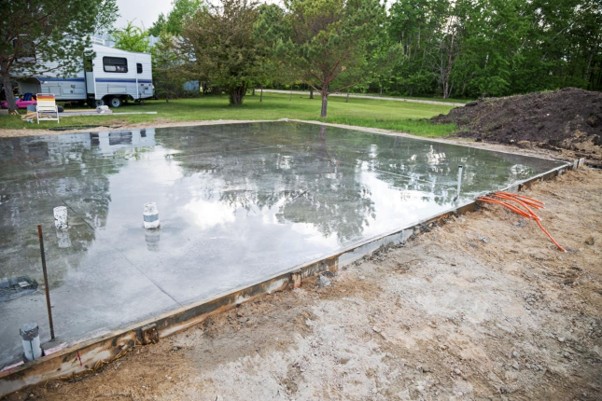
A properly constructed Concrete Slab offers numerous advantages.
These include:
- Exceptional durability
- High structural strength
- Fire resistance
- Low maintenance requirements
- Versatility in construction applications
- Long service life
These benefits explain why Concrete Slab systems continue to dominate modern construction projects.
Common Mistakes Beginners Should Avoid
Beginners often make mistakes that affect Concrete Slab performance.
Common errors include:
- Poor soil preparation
- Inadequate compaction
- Incorrect reinforcement placement
- Excess water in the mix
- Improper curing
- Poor finishing techniques
Avoiding these mistakes can significantly improve construction quality.
Summary
A Concrete Slab is one of the most important structural components in modern construction. Whether used in homes, commercial buildings, industrial facilities, or infrastructure projects, a properly designed and constructed Concrete Slab provides strength, stability, and long-term durability.
For beginners, understanding every stage of Concrete Slab construction—from site preparation and reinforcement placement to concreting, finishing, and curing—is essential for achieving successful results. Attention to detail during each phase helps prevent common defects and ensures optimal structural performance.
As construction technology continues to evolve, the principles of proper Concrete Slab construction remain fundamental. By following best practices and maintaining quality standards, builders can create durable structures that serve safely and effectively for decades.
Subscribe to my channel on YouTube to gain access to a wealth of knowledge and expertise that can elevate your understanding of Real Estate, project management concepts, & Construction.
Related Articles: Construction