
Managing large construction projects is a challenging task that requires careful planning, coordination, resource management, and continuous monitoring. Modern construction projects often involve multiple contractors, hundreds of workers, complex schedules, strict deadlines, and significant financial investments. Without an effective project management system, even well-planned projects can face delays, cost overruns, and resource conflicts.
This is where Primavera has become one of the most trusted project management solutions in the construction industry. Widely used across infrastructure, commercial, industrial, and large-scale development projects, Primavera helps project managers create detailed schedules, allocate resources efficiently, track progress, and maintain control over project timelines.
As construction projects continue to grow in complexity, Primavera plays a crucial role in ensuring projects stay on schedule and achieve successful outcomes. Understanding how Primavera works and the benefits it offers can help construction professionals improve project planning and execution.
What Is Primavera?

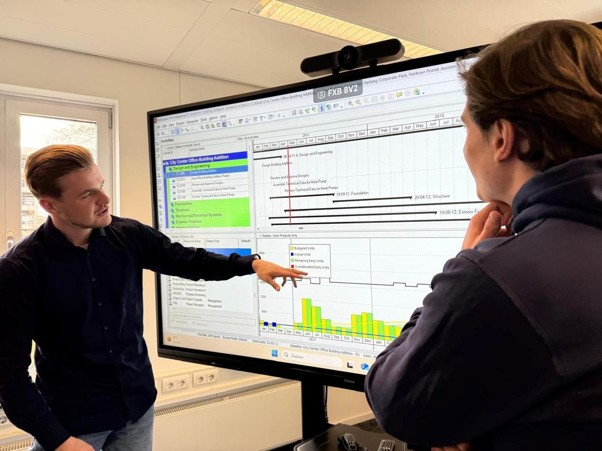
Primavera is a project portfolio management software widely used for planning, scheduling, managing, and controlling large projects.
Originally developed by Primavera Systems and now owned by Oracle, Primavera is particularly popular in industries such as:
- Construction
- Engineering
- Infrastructure
- Energy
- Manufacturing
- Oil and gas
The most commonly used version in construction is Primavera P6, which allows project managers to handle complex schedules involving thousands of activities and multiple stakeholders.
Primavera provides detailed visibility into project performance, enabling better decision-making and schedule control.
Why Scheduling Is Critical in Large Construction Projects
Construction projects operate within strict timelines and budgets.
Delays can result in:
- Increased labor costs
- Equipment idle time
- Contractual penalties
- Client dissatisfaction
- Reduced profitability
A structured scheduling system is essential to coordinate:
- Design activities
- Procurement processes
- Construction operations
- Resource allocation
- Project milestones
Primavera helps project teams develop realistic schedules and maintain control throughout the project lifecycle.
How Primavera Supports Project Planning
Effective planning is the foundation of successful project delivery.
Primavera enables project managers to create comprehensive project plans by defining:
- Project scope
- Work breakdown structures (WBS)
- Activity sequences
- Resource requirements
- Milestones
- Deadlines
This structured approach provides a clear roadmap for project execution.
By organizing activities logically, Primavera helps reduce confusion and improve project coordination.
Work Breakdown Structure (WBS) in Primavera
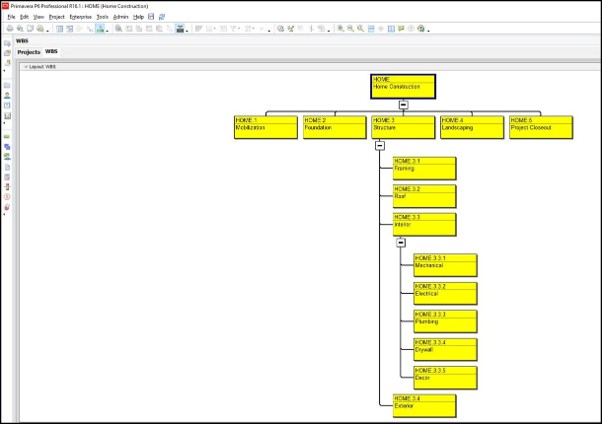
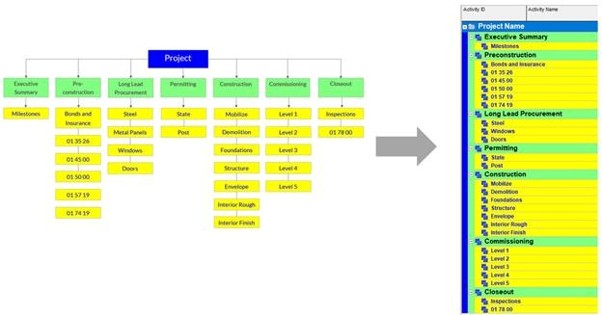
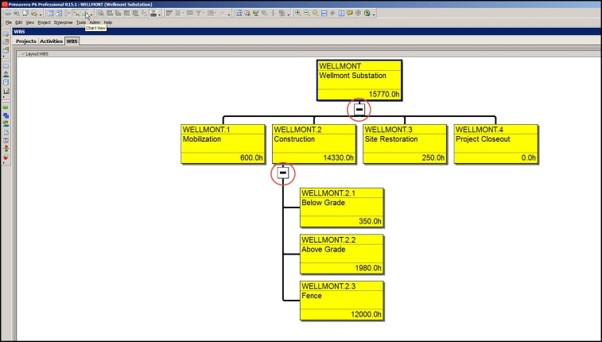
One of the key features of Primavera is its ability to create detailed Work Breakdown Structures.
A Work Breakdown Structure divides a project into manageable sections.
Examples may include:
- Site preparation
- Foundation works
- Structural construction
- Mechanical systems
- Electrical systems
- Finishing works
The WBS helps project teams:
- Organize project scope
- Track progress effectively
- Assign responsibilities
- Improve project visibility
By breaking complex projects into smaller components, Primavera simplifies project management.
Activity Sequencing and Dependency Management
Construction activities rarely occur independently.
Many tasks depend on the completion of other tasks before they can begin.
Examples include:
- Excavation before foundation work
- Foundation completion before structural framing
- Structural completion before interior finishes
Primavera allows project managers to establish activity relationships such as:
- Finish-to-Start
- Start-to-Start
- Finish-to-Finish
- Start-to-Finish
These dependencies help ensure that project schedules reflect real-world construction requirements.
Accurate sequencing is critical for maintaining realistic schedules.
Critical Path Analysis with Primavera
One of the most powerful features of Primavera is Critical Path Method (CPM) analysis.
The critical path identifies activities that directly impact project completion dates.
If a critical activity is delayed, the entire project may be delayed.
Primavera helps project managers:
- Identify critical activities
- Monitor critical paths
- Prioritize resources
- Implement corrective actions
Understanding the critical path enables better schedule management and risk mitigation.
Resource Planning and Allocation
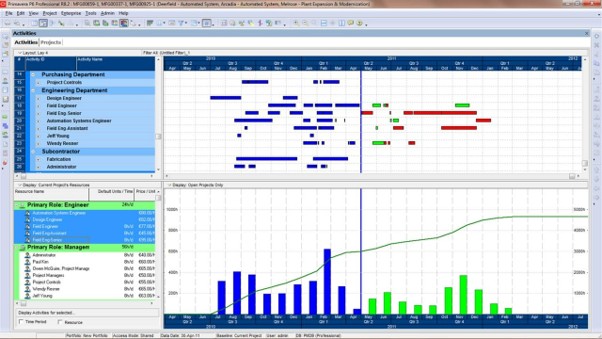
Resource management is a major challenge in large construction projects.
Resources include:
- Labor
- Equipment
- Materials
- Subcontractors
Primavera enables project managers to allocate resources efficiently across activities.
Benefits include:
- Reduced resource conflicts
- Improved productivity
- Better workforce utilization
- Minimized equipment downtime
Resource planning through Primavera helps ensure that resources are available when needed.
Improving Schedule Accuracy
Accurate scheduling is essential for project success.
Primavera improves schedule accuracy by allowing project managers to:
- Estimate activity durations
- Define dependencies
- Allocate resources
- Model project scenarios
The software provides realistic project schedules based on actual project conditions.
Improved schedule accuracy helps:
- Reduce delays
- Improve forecasting
- Enhance decision-making
Reliable schedules contribute significantly to successful project delivery.
Progress Tracking and Monitoring
Large construction projects require continuous monitoring.
Primavera provides powerful tracking tools that allow project teams to compare:
- Planned progress
- Actual progress
Project managers can monitor:
- Activity completion
- Schedule variance
- Resource utilization
- Milestone achievement
Regular monitoring helps identify issues before they become major problems.
Early intervention improves schedule performance and project outcomes.
Managing Multiple Projects Simultaneously
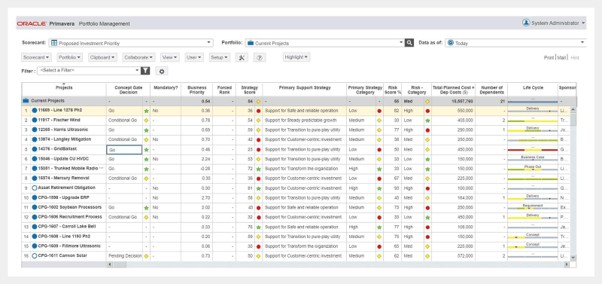
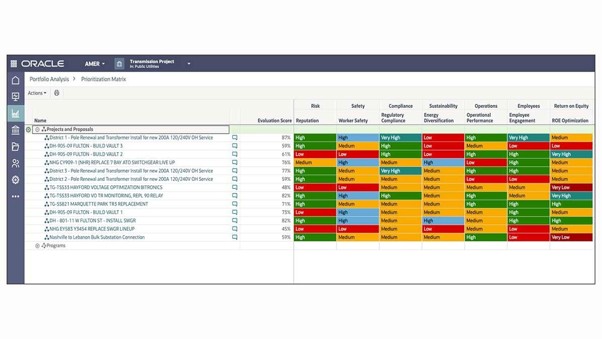

Many organizations manage several projects at the same time.
Primavera allows users to manage multiple projects within a single platform.
Benefits include:
- Centralized scheduling
- Resource sharing
- Portfolio visibility
- Standardized reporting
This capability is especially valuable for:
- Infrastructure developers
- Government agencies
- Construction firms
- EPC contractors
Managing multiple projects efficiently improves organizational performance.
Risk Management Using Primavera
Every construction project faces risks that may affect schedules.
Examples include:
- Weather delays
- Labor shortages
- Material procurement issues
- Equipment failures
Primavera helps project managers assess schedule risks through:
- Scenario analysis
- Schedule simulations
- Impact assessments
By identifying potential issues early, project teams can develop mitigation strategies before delays occur.
This proactive approach strengthens project resilience.
Cost Control Through Primavera
Time and cost are closely connected in construction projects.
Schedule delays often result in:
- Increased labor expenses
- Higher equipment costs
- Additional overhead charges
Primavera helps control costs by maintaining schedule discipline.
Project managers can:
- Track progress against budgets
- Monitor resource costs
- Forecast financial impacts
Improved schedule management directly supports cost control objectives.
Enhancing Communication and Collaboration

Construction projects involve multiple stakeholders.
These may include:
- Clients
- Contractors
- Consultants
- Engineers
- Suppliers
Primavera improves communication by providing a centralized source of project information.
Benefits include:
- Improved transparency
- Better reporting
- Faster issue resolution
- Enhanced stakeholder coordination
Clear communication helps maintain alignment across project teams.
Reporting and Performance Analysis
Project managers need accurate information to make informed decisions.
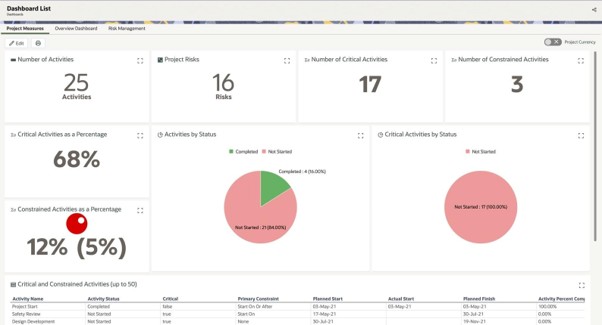
Primavera offers extensive reporting capabilities that help monitor:
- Schedule performance
- Resource utilization
- Project status
- Milestone completion
Reports can be customized to meet the needs of:
- Clients
- Management teams
- Contractors
- Project stakeholders
Effective reporting improves project visibility and accountability.
Primavera and Large Infrastructure Projects
Large infrastructure projects often involve:
- High complexity
- Long durations
- Multiple contractors
- Significant risks
Examples include:
- Highways
- Airports
- Railways
- Metro systems
- Power plants
Primavera is widely used on these projects because it can manage thousands of interconnected activities efficiently.
Its advanced scheduling capabilities help keep large-scale developments on track.
Advantages of Using Primavera in Construction
Some of the key advantages of Primavera include:
- Detailed project scheduling
- Critical path analysis
- Resource optimization
- Progress tracking
- Cost control support
- Risk management capabilities
- Multi-project management
- Improved reporting
These benefits contribute directly to successful project delivery.
Challenges When Implementing Primavera



While Primavera offers significant benefits, successful implementation requires:
- Proper training
- Accurate data entry
- Consistent schedule updates
- Management commitment
Common challenges include:
- Learning curve for new users
- Complex project structures
- Maintaining schedule accuracy
Organizations that invest in proper training and processes typically achieve better results.
Summary
Primavera has become one of the most powerful project management tools for large construction projects. Its ability to create detailed schedules, manage resources, track progress, analyze critical paths, and support informed decision-making makes it an essential solution for modern construction management.
By helping project teams plan effectively, monitor performance, control costs, and manage risks, Primavera plays a crucial role in keeping large construction projects on schedule. From commercial developments and industrial facilities to highways and infrastructure projects, Primavera provides the structure and visibility needed to navigate project complexity successfully.
As construction projects continue to grow in scale and sophistication, the importance of Primavera will only increase. Organizations that leverage its capabilities effectively are better positioned to deliver projects on time, within budget, and to the highest standards of quality and efficiency.